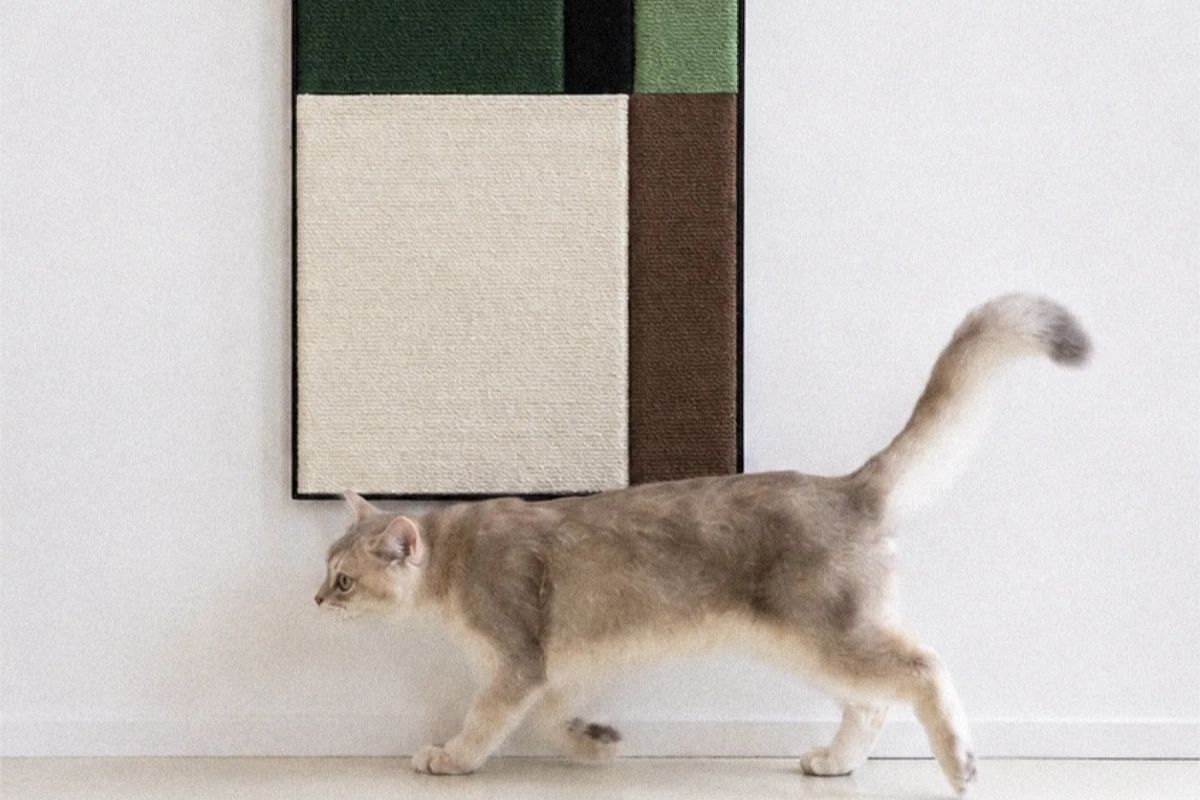
The Pacato Cat Scratching Panel by Otiora is a design-led scratching solution for cat owners who want to protect furniture without adding a bulky cat tower to the room. This functional and compact cat scratcher doubles as wall decor and allows cats to express everyday cat behaviour such as stretching, clawing, and scent marking. With modular replaceable blocks and considered materials, the Pacato scratcher is made for homes where feline enrichment and interior style need to co-exist.

Why do cats need a dedicated scratching surface?
Cats need a dedicated scratching surface because scratching is normal, healthy cat behaviour. A cat scratches to shed the outer layer of the claw, stretch the shoulders and back, mark territory through scent glands in the paws, and release energy. Cats that don’t have access to a pet scratching board or scratching pad, with instead use the furniture, curtains or carpet.
That is why the right scratcher is not about “stopping” scratching and more about redirecting it. A good tactile surface gives your cat a place to do what comes naturally while helping preserve your home.
A cat scratcher designed for contemporary living
Many cat products solve one problem while creating another: they give the cat something to use, but they interrupt the look and flow of the space. A large cat scratching post or carpeted tower may work well in a spare room but feel out of place in a styled living area. Pacato is different because it’s designed to complement contemporary living spaces.
Inspired by the abstract geometry associated with artist Mondrian, the Pacato panel uses modular blocks to create a clean, graphic composition. Instead of hiding the cat scratcher in a corner, owners can place it where the cat will actually use it and still feel good about how it looks. The wall-mounted format also helps to free-up floor space, which matters in apartments, small homes and narrow hallways.
The 38 x 52cm size makes it compact enough to integrate into daily living areas while still giving cats a meaningful surface to engage with. Because it can be mounted at a height that suits your cat, it can become a more ergonomic scratching station than a low, flimsy board that slides away at the first serious stretch.
Materials that support durability and a lighter footprint
A durable cat scratcher needs to withstand repeated pulling, clawing, and stretching. The Pacato Scratch Panel features mixed materials that are durable while also considering sustainability. The panel uses FSC plywood, a recycled aluminium frame, and kraft paper rope as the scratching surface.
The modular construction is especially important for long-term value. Instead of replacing the whole panel when one section becomes worn, individual blocks can be replaced. That can extend the useful life of the product, reduce waste, and keep the panel looking intentional rather than tired.
For design-conscious owners, this matters because pet products often age visibly. A worn-out scratching pole can quickly become clutter. A modular system gives you a more controlled way to maintain both function and appearance.
Key benefits include:
- FSC plywood for a structured base.
- Recycled aluminium framing for a clean edge and durable support.
- Kraft paper rope surfaces that offer a satisfying texture for claws.
- Replaceable blocks so the most-used areas can be refreshed individually.
- A compact panel format that reduces the need for bulky freestanding furniture.

How does the Pacato scratcher support natural cat behaviour?
The Pacato cat scratcher supports natural cat behaviour by offering a stable, textured surface where cats can stretch, scratch, and mark in a consistent location. For many cats, especially vertical scratchers, a wall-mounted panel is appealing because it allows a full-body reach.
The key is matching the product to your cat’s existing preferences. Some cats naturally scratch upright surfaces such as sofa arms, walls, and door frames. Others prefer horizontal surfaces such as rugs and flat pads. The Pacato wall scratcher is especially well suited to cats that like vertical scratching, but its placement can still support varied engagement depending on how the cat approaches the surface.
A well-placed scratching panel contributes to feline enrichment by giving your cat an outlet for movement, texture exploration, and territory marking.
Placement makes the difference
Even the best cat activity centre or scratching surface can fail if it is placed where the cat has no reason to go. Cats usually scratch in socially meaningful or transition-heavy areas: near resting spots, beside furniture, close to entryways, or in rooms where their humans spend time. If the Pacato wall scratcher is mounted in an unused corner, it may not become part of your cat’s behaviour pattern.
Start by observing where your cat already scratches. If they target the side of a sofa, mount the scratch panel nearby, then guide attention toward it with positive reinforcement. If your cat scratches after waking, consider placing the panel close to a favourite bed or resting area.
Height is just as important as location. A vertical scratcher should allow the cat to extend fully through the shoulders and back without crouching.
Introducing the panel without pressure
Cats are more likely to accept a new scratcher when the experience feels rewarding and voluntary. Avoid forcing paws onto the surface, as that can make the panel feel unpleasant or suspicious.
Try this simple introduction plan:
- Place it near an existing scratching target. This makes the new surface relevant to an area your cat already favours.
- Add positive associations. Offer treats, praise, or play near the panel when your cat investigates it.
- Redirect calmly. If your cat scratches furniture, gently guide them towards their new scratching panel.
- Reward the first real scratches. Immediate praise or a small treat helps your cat connect the action with a positive outcome.
- Keep the old target unattractive. Temporary furniture covers or double-sided deterrent tape can make the previous spot less satisfying while the new habit forms.
Patience is part of the process. Some cats test a new surface within minutes, while others need days of low-pressure exposure. The goal is to make the scratching panel the easiest, most satisfying option in the room.
A better fit than many bulky scratchers
Traditional scratchers still have their place. A tall sisal cat scratching post can be excellent for cats that love climbing, and a flat scratching pad may suit a cat that prefers to dig claws into the floor. The Pacato scratcher is different: it brings scratching into the living environment without demanding the floor-space of a large structure.
That makes it a strong option for people who have tried basic scratchers but disliked how they looked or how quickly they wore out. It’s also useful for households where the cat already scratches vertical surfaces.
A good quality cat scratcher won’t replace every form of feline enrichment in the home. Cats still benefit from play, climbing opportunities, resting zones, and interactive time with their people. But as a focused scratching solution, the Pacato panel fits the brief: A stable vertical scratcher with a design-forward presence.
Simple maintenance keeps it looking intentional
A scratcher is supposed to show use, but it does not have to become untidy. Regularly check the surfaces for heavy wear, loose fibres, or sections your cat has clearly chosen as favourites. Because Otiora offers individually replaceable blocks, you can refresh worn blocks instead of retiring the whole panel.
A clean and satisfying texture encourages repeated use. When the preferred scratching area stays functional, your cat has less reason to return to furniture.
Perfect for style-conscious cat homes
The Pacato Cat Scratching Panel by Otiora is a thoughtful solution to a common stress in cat homes: cats need to scratch, but people don’t want their homes filled with bulky pet furniture. The compact wall-mounted format, modular replaceable blocks, and considered materials, makes the Pacato panel a durable cat scratcher that feels integrated.
For the best results, treat the Pacato Scratching Panel as part of your cat’s environment, not just a decorative object. Place it where your cat already wants to scratch, mount it at a comfortable stretch height, introduce it with patience, and maintain the blocks as they wear. It can help protect furniture, support feline enrichment, and add a quiet design statement to the room.
Bring some design harmony into your pets space with Otiora